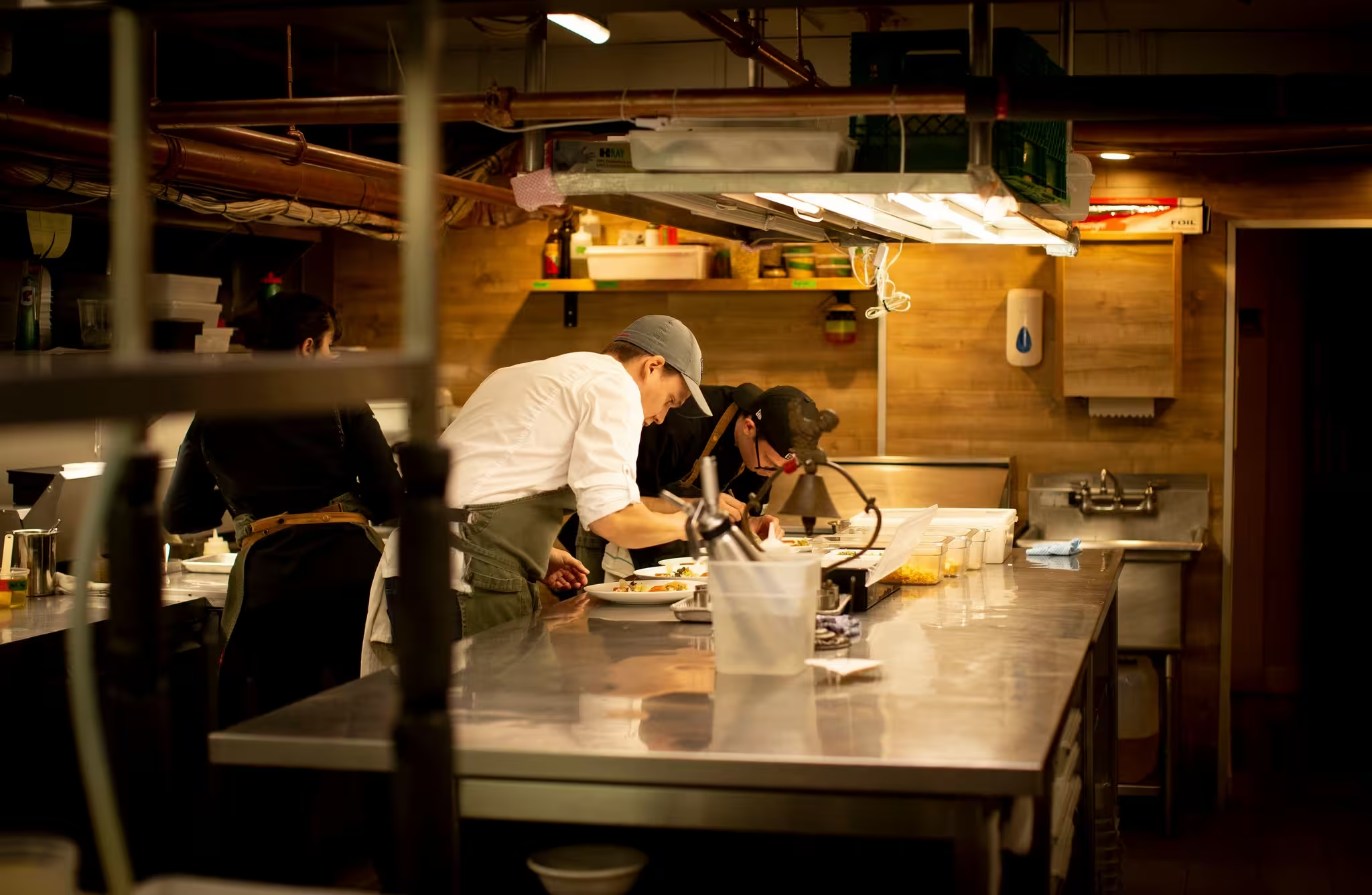
Your chef changes the signature dish in service. The recipe sheet stays exactly the same.
That is usually where the problem starts. Not with a major mistake. Not with a crisis. With a small adjustment made in the middle of a busy service, because the dish still has to go out, because the night still has to be saved, because in a kitchen, reality always arrives before paperwork.
In a multi-location group, that kind of gap eventually becomes normal. Every kitchen adapts in its own way. One ingredient is swapped here, a portion is adjusted there, a product is replaced somewhere else. On the floor, it looks like efficiency. At head office, it still looks like a standard recipe. Between the two, there is a growing gap.
When the official recipe no longer describes the real plate
The recipe sheet should be the anchor. It should reflect what is actually leaving the kitchen. In practice, it often becomes a frozen document while the dish itself keeps evolving service after service.
That is where the drift begins:
- The same recipe no longer costs the same from one site to another.
- Real portions no longer match the intended version.
- Local substitutions change the margin without an immediate alert.
The issue is not that kitchens adapt. The issue is that the adaptation is not visible quickly enough to correct.
Margins that drift in silence
When recipe sheets diverge from one location to another, margin stops being a stable metric. It becomes a blurred average that hides very different realities.
One site may absorb rising costs without too much pain. Another may see profitability slip week after week. Yet if head office only sees consolidated numbers, the drift stays hidden until it is already built in.
And the bigger the group gets, the more expensive this becomes. Because a small variation repeated across several kitchens eventually turns into a real hole in performance.
The report that arrives too late
Food cost is useful. But if it arrives after the menu decision has already been made, it mostly serves to confirm the mistake. It no longer helps prevent it.
That is the core issue: menu decisions are often made with data that is already outdated. By the time the report comes in, by the time the analysis is reviewed, by the time the decision is discussed, the menu is already live. You end up reacting to the past while the kitchen has already moved on.
In that context, a monthly report can create the illusion of control. In reality, it explains what already happened instead of helping shape what needs to happen now.
What needs to be visible sooner
The real challenge is not only measuring. It is seeing fast enough to make the right call.
A group that wants to stay in control needs to be able to:
- spot recipe drift quickly;
- compare variances across locations;
- measure the real impact of a service change;
- adjust the menu before the margin is already damaged.
Without that, head office is steering with yesterday’s map while the kitchens are operating in the present.
The question that matters
Are your menu decisions based on this month’s numbers, or last month’s?
Because between the two, there is often the difference between managing performance and simply documenting decline.