In 2026, the most useful technologies in foodservice aren’t the ones you notice
In foodservice, innovation is often associated with what the customer sees.
Mobile payments, QR menus, self-order kiosks… These technologies are visible, reassuring, and easy to showcase. They create a sense of modernity and efficiency.
But on the ground, they’re not the ones that truly change operations.
The most useful technologies in 2026 are often invisible.
They don’t change the customer experience. They change how operations are managed day to day.
The real problem isn’t a lack of tools
Most operations today are already equipped.
And yet, the same issues keep showing up:
- Incomplete or inconsistent inventory counts
- Cost fluctuations with no clear explanation
- Losses that only appear at the end of the month
- Teams applying standards inconsistently
- Decisions made too late
The problem isn’t technology.
It’s structure.
The data exists, but it’s fragmented, unreliable, or unusable in real time.
What actually changes daily operations
The most valuable investments today are not the ones that improve appearance.
They’re the ones that improve operational visibility.
We’re talking about solutions like:
- Real-time inventory management
- Consumption-based replenishment
- Digital checklists to standardize execution
- Temperature monitoring and simplified traceability
- Forecast-based planning
- Unified platforms connecting purchasing, production, inventory, and performance
These tools don’t create a “wow” effect.
But they eliminate blind spots.
The end of blind spots
The real shift in 2026 isn’t technological.
It’s operational.
When information is scattered, managers react.
When it’s centralized and reliable, they anticipate.
They can finally see:
- Where discrepancies are created
- Which items actually impact margins
- Where operations drift
- And most importantly, act before issues become structural
The difference is simple: moving from reaction to anticipation.
Regaining control over margins
Margins aren’t lost in a single decision.
They erode daily:
- through portion inconsistencies
- through waste
- through inventory discrepancies
- through execution gaps
Without visibility, these issues remain invisible.
With the right tools, they become measurable — and therefore fixable.
That’s where technology becomes truly valuable.
The only question that matters
In 2026, the question is no longer:
“What’s the most innovative technology?”
It’s:
“Which one gives me more clarity, less friction, and more control every day?”
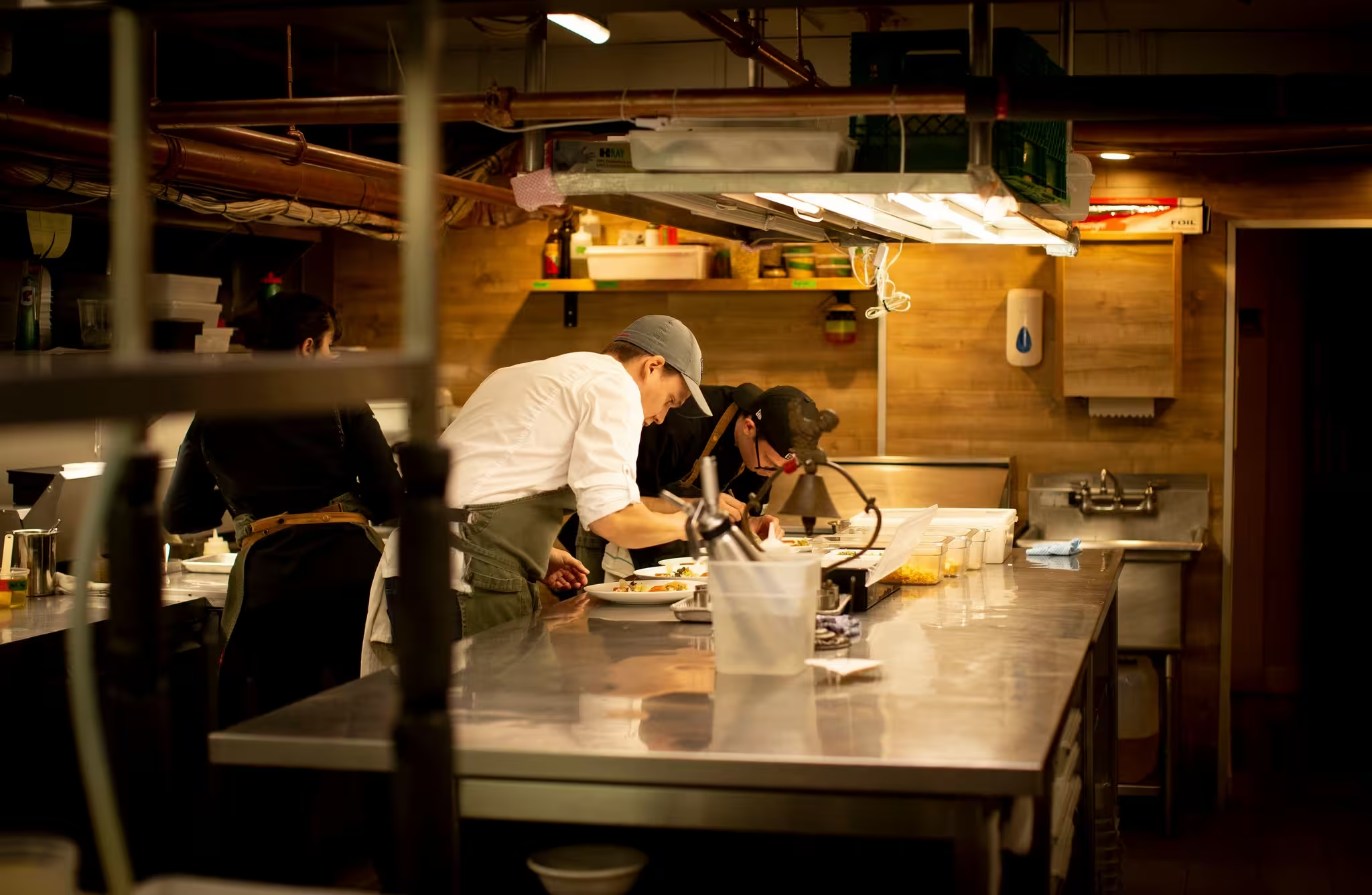
Because performance in foodservice doesn’t depend on what’s visible in the dining room.
It depends on what’s controlled in the kitchen.
Where it becomes concrete
This is exactly where platforms like Octogone fit in.
They don’t add another layer of tools.
They connect what already exists: recipes, inventory, production, and costs.
And that changes one key thing:
You’re no longer working with estimates.
You’re working with a clear view of what’s actually happening.
Less guesswork.
More consistency.
And decisions finally based on usable data.