
Tips
Your Best Recipe Could Become Your Biggest Risk
When recipes slowly drift from one kitchen to another, restaurants don't only lose money—they lose customers. Here's why recipe consistency matters.
2 min read
Octogone Team
When recipes slowly drift from one kitchen to another, restaurants don't only lose money—they lose customers. Here's why recipe consistency matters.
In the restaurant business, a recipe is more than a list of ingredients. It's a promise. Every time a guest orders your signature salmon tartare, burger, or house soup, they expect the same experience they enjoyed the last time.
Consistency is what builds loyalty.
Yet in multi-location operations, consistency often fades without anyone noticing.
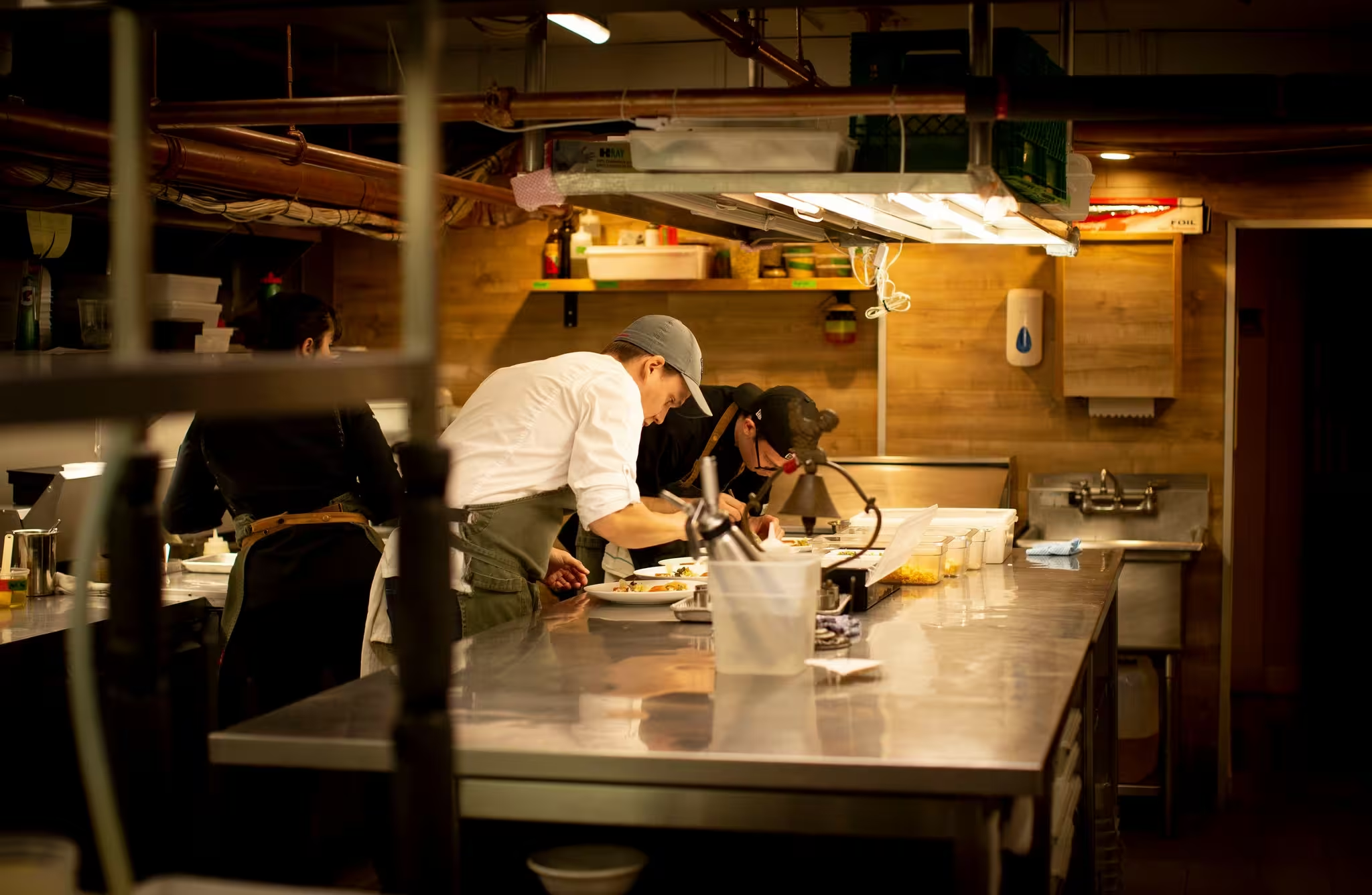
It starts with a well-designed recipe. The ingredients are defined, the quantities are accurate, and the preparation method is documented. Over time, however, each kitchen begins making small adjustments. One chef adds a little more salmon. Another changes the seasoning. Someone else plates it differently. None of these changes are made with bad intentions. Each one seems reasonable in the moment.
The problem is that these small changes gradually become the new standard.
A few weeks or months later, the same dish no longer tastes, looks, or costs the same from one location to another.
Your guests don't know your recipe sheet.
They don't know whether the portion increased from 180 to 190 grams or whether the preparation changed slightly.
They simply know that the dish they loved doesn't feel the same anymore.
That's often when trust begins to disappear.
Restaurants don't always lose customers because of one bad meal. Sometimes they lose them because the experience is no longer consistent. When guests can't rely on getting the same quality every visit, they eventually choose another restaurant.
Standardization isn't just an operational process.
It's a customer retention strategy.
Keeping recipes centralized, controlling portions, and ensuring every location follows the same official version helps protect food costs, but more importantly, it protects your brand.
Every recipe is part of your identity.
It should be prepared the same way, in every kitchen, by every team, every single day.
At Octogone, that's exactly what we help restaurant groups achieve. One official recipe. Always up to date. Shared across every location. Because in the end, it's not only your food cost that's at stake.
It's your customers' trust.

When supplier invoices are entered late, recipe costs continue running on outdated pricing. The result: unreliable food cost, distorted margins, and operational decisions based on delayed data. Discover how Octogone centralizes invoices, recipes, purchasing, inventory, and cost management to reduce discrepancies and improve operational visibility.
Food cost is often miscalculated in restaurants, directly impacting profitability. Learn how to measure it correctly, avoid common mistakes, and improve your margins with practical methods.
A look back at 2025 at Octogone: key product innovations, strategic integrations, and a bold roadmap for 2026—all designed to help restaurant operators improve performance and profitability.